
Lake Township Resident Lookup Records
No government office keeps a master list of Lake Township residents. A sound name search instead asks one limited question at a time. A parcel record is a current land and tax record. A recorded deed is evidence of an instrument. A voter result concerns registration. Court, vital, business, and license records each have their own purpose and date. Treat them as pieces that must agree, rather than as interchangeable proof that a person currently lives somewhere.
| Record | What it can confirm | Custodian | Access route |
|---|---|---|---|
| Parcel and tax record | Recorded owner, situs, mailing contact, parcel, legal description | Stark County property and Treasurer systems | Public web search, then the relevant county counter |
| Recorded instrument | Grantor, grantee, document reference, and deed description | Stark County Recorder | Index or Recorder counter |
| Voter record | Public registration fields for a named person | Ohio Secretary of State and Stark County Board of Elections | Individual lookup or a lawful focused request |
| Court or probate matter | Party role, docket, case number, or estate relationship | Stark County courts | Public index where available, then clerk or records center |
| Vital, license, or entity record | Event, credential, or formal entity connection | Health, Probate, state boards, or Secretary of State | Each custodian's defined search or order path |
Start with the Stark County Real Estate Search when an address or likely owner is known. Write down the parcel number, physical situs address, tax-mailing name, and legal description. Then use the Stark County Recorder search to locate the actual instrument. The property profile is a lead; the recorded document supplies the transfer detail.
Verify a Lake Township Resident
To look up a resident without mixing two people with the same name, anchor the search to a record that has more than a name. Save the spelling exactly as it appears, including a middle initial. Compare the physical address, tax mailing address, parcel number, legal description, case number, event date, and party role. Those fields were created for different reasons, so they may not all match. A tax-mail contact, for example, is not necessarily an occupant.
- Find the address or owner in the property system and capture the parcel and both address fields.
- Find the actual Recorder instrument for that owner or parcel trail, then compare the deed's parties and legal description.
- Use Ohio My Voter Information only for the named person. First name, last name, and Stark County are required; Street Name appears only to narrow matches.
- Check a court or Probate index when a public case, estate, marriage, or name-change connection is relevant, then reconcile its date and case number with the other records.
- For an earlier claim, use Stark Library indexes and the original source, not a modern address as a substitute for historical proof.
- Parcel
- A county identifier for a piece of land. It helps connect a current address to tax and map records.
- Index versus image
- An index points to a record. The underlying image or original document is the evidence to read before relying on the entry.
- Certified copy
- A copy issued and certified by the record custodian. Ask that office about its current eligibility and fee rules.
- Docket
- A court's running list of filings and actions in a case, not a finding that every listed party shares the same address.
Note: A missing result can reflect a spelling variation, an older record, a protected field, a sealed case, or an online coverage gap.
Lake Township Name-Match Myth
Myth: a parcel owner or tax-mailing name identifies everyone at a Lake Township address. The property card separates the situs address, which is the physical parcel location, from the Tax Mailing Name and Address, which is where notices go. A tax contact can be a post-office box, a trustee, an agent, or an address outside the area. It is a record-specific lead, not a household roster or proof that the named person currently occupies the parcel.
Same-name errors are also common in a name search. Do not merge records because the surname, town label, or an old address looks familiar. Check an exact first name, middle initial, a prior address, parcel and legal description, a court case number, or a dated life event. When two sources disagree, identify which office created each record and when. That makes it possible to ask the right custodian about a particular field or correction rather than asking an office to confirm where someone lives.
For a historical Lake Township name, Stark Library's County Index Files offer specific routes through the Lake Township Poll Book Index for 1858 and 1874 to 1876, tax indexes, wills, marriage material, and naturalization. These are dated research leads. They need the cited original, microfilm, or file before they become evidence of a household connection.
Lake Township Resident Court Paths
Lake Township is served through Stark County courts. Common Pleas and its Legal Division are the route for public Common Pleas files. Probate can provide a public web index, docket, and images for pending nonconfidential matters, but the official Probate record remains at Suite 501. Canton Municipal Court serves Lake Township, so a local traffic, civil, or criminal question may belong there instead of a countywide court file. Adoption, juvenile, sealed, and other confidential matters are not name-search channels.
The Clerk Naturalization Search is a clear example of a historical name index. It offers By Name Upon Arrival with last and first name, By Year of Arrival with a from and to range, By Origin Country, and By Vessel with vessel number. The index points to docket or journal material; the public case documents remain with the Clerk's Legal Division at 115 Central Plaza North. Request a defined case component, date, and number if the web result is not enough.
The Clerk Naturalization Search displays the historical search modes used for Lake Township name research.
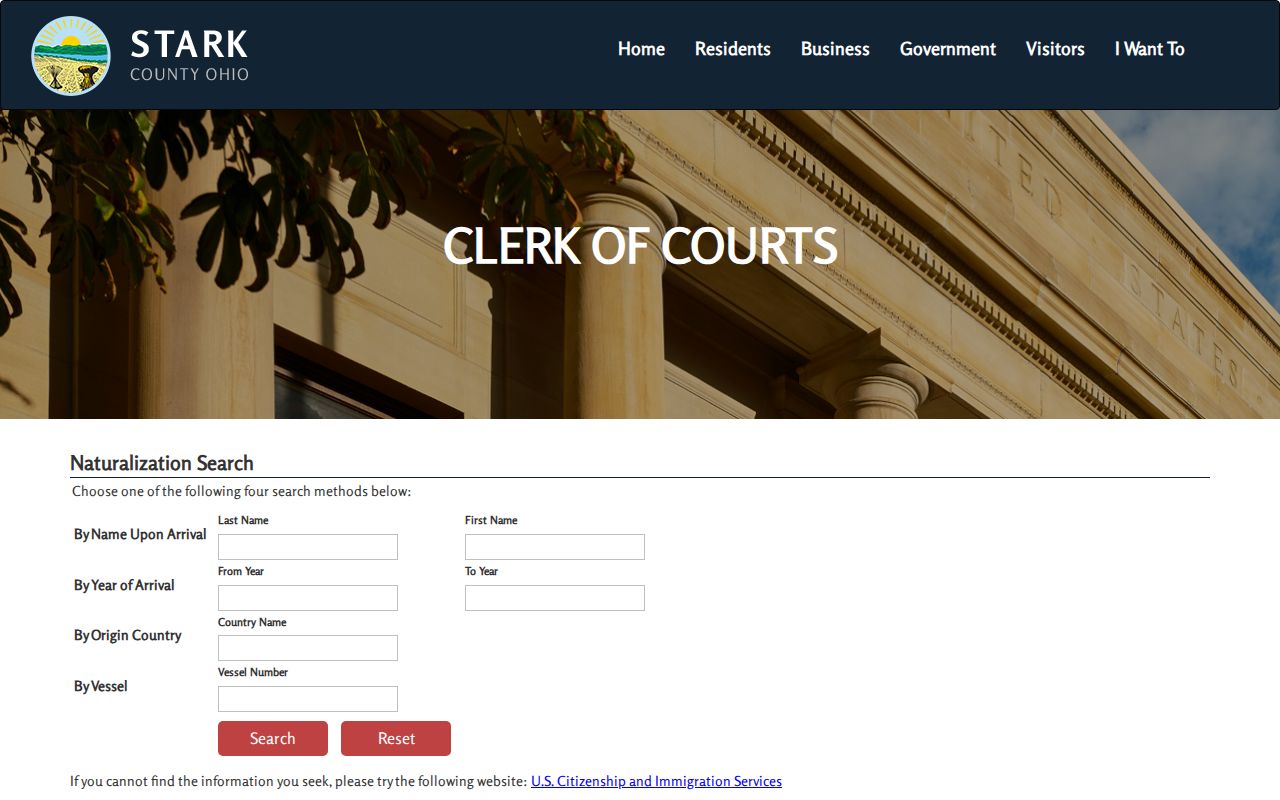
A naturalization hit is a lead to the Clerk's docket and journal records, not proof of a present address.
- Name mode: last name and first name for the arrival-based search.
- Arrival mode: from year and to year.
- Origin mode: country name.
- Vessel mode: vessel number.
- Record route: the corresponding docket or journal and, where public, the Clerk's actual file.
Note: The accessible naturalization form is a historical index; the Legal Division holds public case documents and supplies the defined-record route.
Lake Township Resident Heir Trail
A probate search can be useful when the goal is to document an heir relationship. Begin with the decedent's name and a workable date range in the Stark County Probate Court path. A public estate index can lead to a case number, fiduciary, heir clues, inventory, will, or administration record. The original file, record book, or certified copy is the source proof. A family story or an index entry alone is not enough to establish an heir relationship.
Older Probate material is split among the court, Stark Library, and University of Akron because archival series were transferred in 1988 while estate case files since 1810 remain at Probate Court on microfilm. That division makes source proof especially important. Ask the named repository for the cited volume, page, or case file, and keep the custodian and date with any note.
Lake Township Death Record Trails
Vital records answer event questions, not current-residence questions. Birth registrations before December 20, 1908 are a Probate and historical-repository route; later births go through the applicable local health district or Ohio Department of Health. For deaths from 1908 forward, Stark County Public Health offers in-person, online, and mail or shipping channels. Its stated rules allow anyone to obtain a death certificate without a Social Security number, while a certificate with that number has relationship or role requirements unless the death is more than five years old.
The Stark County Coroner supplementary death search is a narrower index, not a certificate-order screen.
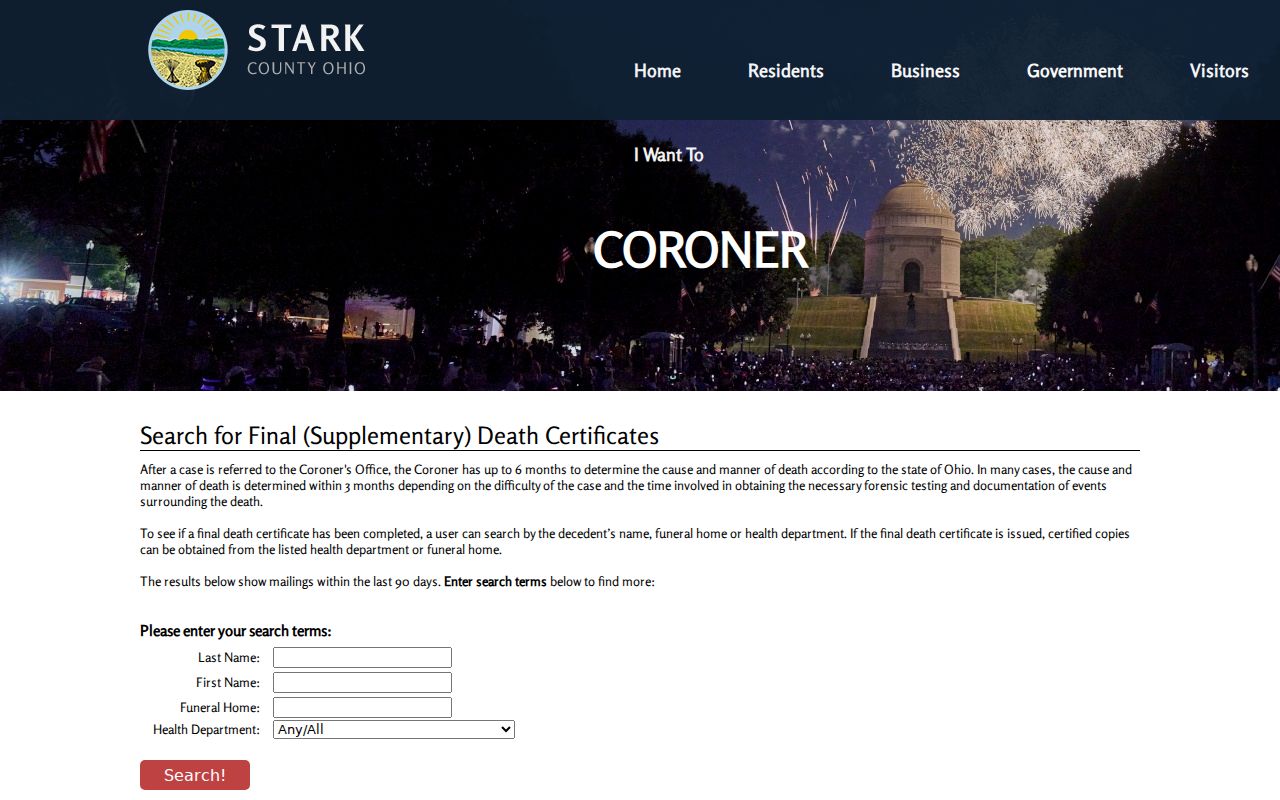
Its visible fields are last name, first name, middle initial, date of death, funeral home, health department, and date mailed. Use those fields to locate the right health-department route, not to infer a complete vital-record history.
Lake Township Resident License Clues
A state credential or entity filing may supply a separate official clue about a named person. Ohio Business Search starts with a business name, then a result and Show Details. It can identify an entity and statutory-agent or registrant information. That is not a general owner list, and a statutory agent must not be described as the business owner. It is a formal filing relationship with its own date.
Ohio eLicense verification offers Individual or Business selection, first name, last name, license number, and board name.
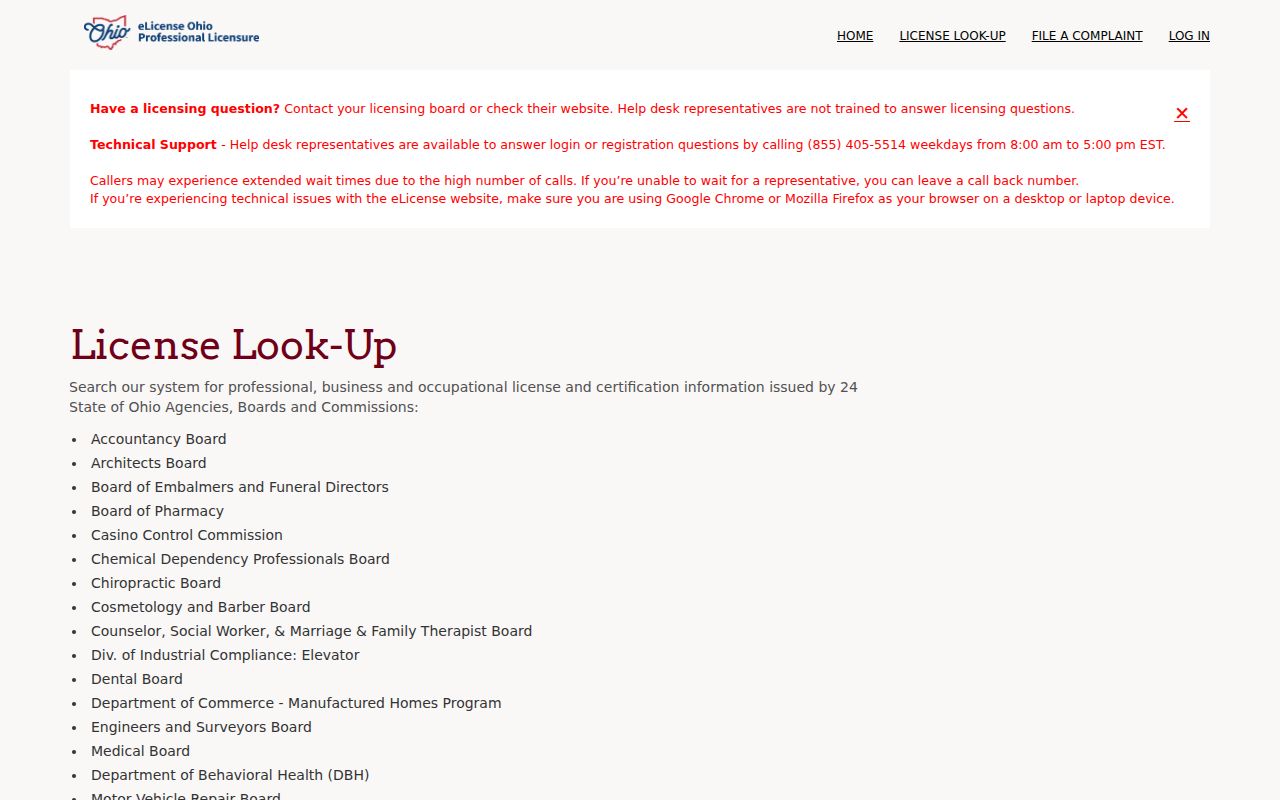
License results can show status, board, license type or number, dates, and public board action. Confirm a disputed detail with the issuing board.
Ohio DRC Offender Search is also narrow: it concerns current incarceration, supervision, or judicial release status and does not establish who lives in Lake Township.
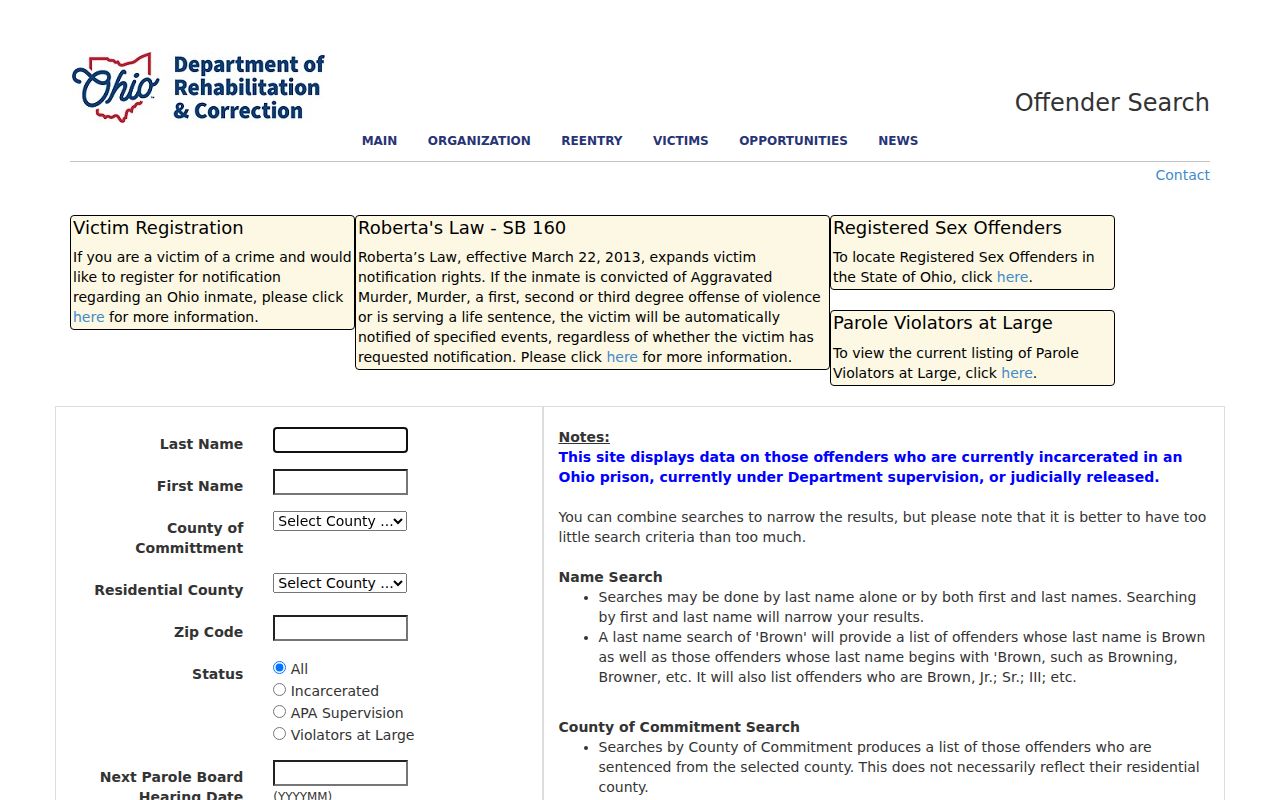
Its residential county and ZIP options have their own status limits, and a listed address may be a last recorded address rather than a current location.
Note: A formal entity or credential connection identifies only the recorded relationship, and a DRC result can use an older address.
Lake Township Resident Lookup Limits
Ohio public-record access does not override confidentiality. Safe at Home Ohio can protect a participant's address connection. Confidential voter registration, protected-worker information, full Social Security and driver-license data, medical information, private utility records, and sealed court material must be left alone. The federal DPPA protects motor-vehicle personal information. A lawful result can be absent because the field is protected, not because the person is missing.
When an online record is unavailable, make a focused request under the Ohio Public Records Act, R.C. 149.43. Identify the case number, document number, party name, approximate date, and requested component. The Act provides prompt inspection and copies within a reasonable period; it does not require a custodian to create a new person search or disclose exempt information.
Lawful use. Use Lake Township records for lawful personal research, family history, estate work, civic transparency, or verifying a specific record. Stalking, harassment, intimidation, and misuse of protected data are prohibited.